

I just want to share a conversation overheard a a few weeks ago and comment on it. The key point is below, I’ll leave the rest out.
Person 1:Â I think I’m becoming an Atheist.
Person 2:Â That’s fantastic.
Person 1:Â Not really, it means I’m going to hell.
Funny, isnt it. The person involved had obviously been questioning their long held beliefs, but can’t quite overcome what’s been deeply ingrained into her, that hell exists. Fear is a favourite tool of the religious, if you don’t believe in God, you will be subjected to an eternity of torture. And there’s no point tippy toeing around the fact, it may not be phrased that exact way in the holy books, but it’s what they mean.
This fear, in some cases, results in people trying their best to be “good”. This causes two problems. Firstly, if it’s only fear that’s making you be a decent person, it’s all obviously fleeting and secondly, the same thing that is imposing the fear, also controls the conditions of that fear. What I mean by this is, if you believe the Bible’s version of things, with Hell existing, the only way you can avoid Hell is to follow the handy directions contained in the same source that describes Hell itself.
So on to the headline, why is denying atheism rejecting humanity? Logic dictates that if you are not an Atheist, you are involved in some belief (wishy washy agnostics excluded). Most belief systems include the concept of punishing those who do not follow it’s guidance. So therefore, by extension, a non-atheist is highly likely to be living in fear of punishment if they do not comply to the moral rules set out in their religion. So, it appears that by applying this logic, the only people on earth who are currently bound by their own moral values are atheists. The only people no living in fear. To me, this solves a whole bunch of problems. We’ve already seen that religious writings can be interpreted in multiple ways, and because of this it’s very easy to end up with fundamentalists. Those who apply the religious rules literally, or those who are filled with so much fear that they become overzealous in enforcing the rules they are bound by.
Personally, I’d rather be bound by my own moral compass, not one written hundreds of years ago that may not even be relevant or applicable today. Any teaching that tries to portray moral ambiguities as straight forward, and black and white, is far off the mark. People need to ability to adapt themselves based on the current position, environment and climate. And they need to do this without fear hanging over their head.

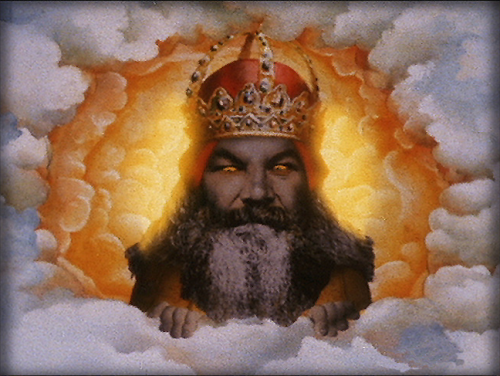
It takes a lot to deconstruct indoctrination.
Personally, I’d rather be bound by my own moral compass, not one written hundreds of years ago that may not even be relevant or applicable today.
And yet, I find it rather interesting that people who can point to a book and say, “That’s my morality. At least I have a foundation. All you have is yourself.”
To deny athiesm is to reject MY humanity!
I am so glad that you KNOW about my humanity.
agnostics and postmodern existentialist a like look! someone else who knows more about us then we do.
your just someone else claims to know truth and the Not truth…. kind of like Zoroaster.
Chris, you’ve obviously missed the point or just plain not read the post you’ve just commented on. Yes, I know your “humanity”. If you are a Christian, which I strongly suspect, you are bound by the moral guidelines stated in the Bible. This means you are bound to the moral compass of whoever wrote the Bible, not your own. By accepting this other persons moral guidelines, and not your own, you are denying something that makes us human. So yes, I know the rules in the Bible, and therefore, because you are bound by them, I know about your humanity.
Chris, are you aware that Zoroasterianism is a “re-up” of Mithraism, an ancient sun god religion from which Christianity borrowed heavily?
this is dumb. ive noticed you always write from the perspective that we (christians) are already wrong before we can reply. yes i believe there is a hell. i cannot prove this yet you cannot disprove this. as an atheist, are you out to find the actual truth? or are you trying to just remain ignorant in your idea that every other theory cant be right because it cant be proven? you write from the perspective that all you can document and prove IS ALL THERE IS AND THERE IS NOTHING ELSE. but how can you be sure. after all, theres believed to be up to 13 different dimensions to reality. us as humans are only aware of 3 dimensions of space and a half dimension of time. so there’s room for lots more out there.
Underoath, I’d like to be the first here to remind you that the burden of proof rests on the person making the claim, not the person refuting it. I’d call your attention to Russell’s Celestial Teapot, The Invisible Pink Unicorn, The Dragon In My Garage and The Flying Spaghetti Monster.
The point being, it is almost impossible to DISPROVE the existence of anything, however, if something DOES exist, then proof is possible.
So you asking Atheists to prove God does NOT exist is pointless, since that can NEVER be done. What we can do, though, is ask YOU to prove that God exists, beyond the doubt of reasonable scepticism. This, for many, has yet to be achieved, which is why I am an Atheist
Underoath, are you claiming that your God is some sort of interdimensional being? Intersting, and surely as science progresses beyond it’s current level of understanding we will be able to witness and interact with this interdimensional God.
Of course, you are way off the mark when it comes to seeking the truth. As a Atheist, I seek the truth, I look for evidence and proof that facts are just that, facts. what I don’t do, and this is what separates Atheists from most theists, is read a book and blindly follow and believe it as truth. Atheists, as a general rule, don’t even believe books that support their beliefs with corroborating evidence from independent parties, or at the very least evidence that can be examined. Consider the following and how theists and atheists would react:
* A priest claims that God spoke to him
* A scientist claims he can prove we evolved from great apes
I am certain that theists would blindly believe the priest’s claim whereas the scientific and atheist communities would question the scientists findings until every avenue had been explored. Deep down you know that is true (and previous incidents support my assertion). Now tell me which party is really seeking the truth.
The Atheist, you say you are seeking to determine the “truth”. However, we will never be able to completely determine the truth beyond doubt, no matter how strong the “proof”. Jesus could descend from heaven right in front of our eyes and most people would probably still not believe the proof (I know I’d struggle).
Since we can never prove the truth beyond doubt, how do you intend to seek it? At some point you are going to have to recognise that god simply cannot be proven or unproven beyond doubt. At this point, you will need to make a choice! God or no God?
Since you seem to have already chosen no God, you are in the equivalent basket to the theists, since neither of you can prove it beyond doubt, and therefore both of you are following a blind belief!
The implications of what I’ve just said are either:
1. You make a choice and trust in an unproveable belief (either that there definitively is a God, or that there definitively is no God).
2. You make no choice ever, and die undecided, simply because you were too afraid of holding any belief.
What’s wrong with holding an unproveable belief anyway? You do, Athiest.
@ athiest
good point but in the same way athiests think that an all powerful being that cant be proven to exist is simply non-existant.
I am a theist. Your assertion that “I am certain that theists would blindly believe the priest’s claim” just boggles my mind. How can you presume to know the thoughts of anyone, especially those of a person who sees things so differently than you do.? My observation is that there have been thousands of priests who have made more thousands of claims, most of both are self-serving and should be ignored. Please do not accuse me of such ludicrous ignorance! You cannot say that because Edison tried 9,000 times to make a light bulb (over-simplified here) and failed, that there cannot be any light bulbs. Your position seems equally ill founded.
Four incorrect statments from a theist perspective:
1. if you don’t believe in God, you will be subjected to an eternity of torture.
No, you must follow your conscience even if that leads you deny God, but you have the responsibility to form your conscience.
2. Most belief systems include the concept of punishing those who do not follow it’s guidance.
Hell is the choice that God allows one to make since he does not force anyone to live with him forever. It is a punishment only in a secondary sense, rather like the ‘punishment’ that comes from stubbing ones toe.
3. the only people on earth who are currently bound by their own moral values are atheists.
obviously wrong. Morality is not only extrinsic (“thou shalt not…”) but intrinsec, ie responding to our most genuine desires.
4. Atheists are the only people no living in fear.
That’s not the impression I get reading these blogs…
4. denying atheism is rejecting humanity.
the opposite is true. atheism, as you put it many times is a choice for self. choosing God is –or should be– a choice to love all God’s creatures and every person.
The good news is that there are some true statements also:
A. if it’s only fear that’s making you be a decent person, it’s all obviously fleeting and … imposing … the conditions of that fear.
Yes we should help people to understand which choices lead to fulfillment and which ones don’t.”
B. Any teaching that tries to portray moral ambiguities as straight forward, and black and white, is far off the mark.
Yes again, but that doesn’t mean that there aren’t some basic principles.
Evolution of the Religious virus or is it Global tribalism
I would first ask Christians to read a few Creation Myths from around the world; Babylonian, Korean, Navajo, Norse, Japanese, Comanche, Chinese, Chelan, Pima, Mayan, Miwok, Scandinavian (Norse), Salish, Australian Aboriginal Hopi, Tahitian, Yokut, Comanche, Egyptian, African – Mande, Yoruba, Micmac, Lakota, India, Romanian, Mongol, Chinese Creation / Flood Myth, Assyrian / Babylonian, Maori, Aztec, Digueno, Apache, Dakota, Hungarian, Iroquois, Inuit, Huron, Hawaiian, Can a Christian demonstrate or provide empirical proof that these myths are less valid than their stories and myths.
So why should anyone (other than Jews or Christians of course) believe the Jewish/Christian creation myth, (told by some goat herders in the Middle East a few millennia ago) to any greater extent than those listed above. One of the answers to this question lies in the nature of Christianity it is fundamentally a huge business where the greater the congregation the greater the money it generates and the greater the power it has in spiritual and political matters.
. Today’s Christianity is made up of a multitude of different sects and branches with splinter groups splitting off almost daily, coupled with Christianity’s ability to absorb parts of other religions, cultures and traditions and make them its own. It adapts and changes to suit local conditions and histories. It pretends to speak with one voice and at the same time blames different factions for atrocities committed in the name of their god, its many schisms and divisions have spread throughout the world each claiming to be the sole custodian of truth. Christianity can’t even agree on its own holy book the Bible,
The Bible is the central religious text of Judaism and Christianity. The exact composition of the Bible is dependent on the religious traditions of specific denominations. Modern Judaism generally recognizes a single set of canonical books known as the Tanakh, It comprises three parts: the Torah (“Teaching”, also known as the Pentateuch or “Five Books of Moses”), the Prophets, and the Writings. It was primarily written in Hebrew with some small portions in Aramaic.
The Christian Bible includes the same books as the Tanakh (referred to in this context as the Old Testament), but usually in a different order, together with twenty-seven specifically Christian books collectively known as the New Testament. Those were originally written in Greek. Among some traditions, the Bible includes books that were not accepted in other traditions, often referred to as apocryphal. Eastern Orthodox Churches use all of the books that were incorporated into the Septuagint, to which they add the earliest Greek translation of the Deuterocanonicals; Roman Catholics include seven of these books in their canon; and many Protestant Bibles follow the modern Jewish canon, excluding the additional books. Some editions of the Christian Bible have a separate Biblical apocrypha section for books not considered canonical.
Many Christians, regard the Bible as inspired by God yet written by a variety of men from different countries and traditions over thousands of years. Many others regard both the New and Old Testament as the undiluted Word of God, spoken by God and written down in its perfect form by humans. Still others hold the Bible as infallible.
Then you have the modern day religions ranging from Joseph Smith and his Latter Day Saints Movement and their holy book of Mormon. Mr Smith claimed to have direct instructions and revelations from God, so why did he have to set up his very own religion to get his message out. The answer is short ‘belief’.
Jehovah’s Witnesses founded by Charles Taze Russell. Consider the Bible as the supreme authority for their teachings and practices, but diverge greatly from traditional Christian theology, which has caused several major Christian denominations to denounce the group as either a cult or heretical sect. Medical ethicists have criticized Jehovah’s Witnesses as an authoritarian group for coercing members to reject blood transfusions. Former adherents have claimed that the religion demands unquestioning obedience from members, with the consequence of expulsion and shunning facing any who act in disagreement with its doctrines. Of course this is mirrored in the Orthodox catholic Churches where excommunication is used as a threat to keep wayward adherents in line. Indeed the threat of being excluded from any group is a very powerful incentive, after all human beings are a social animal with a psychological need to be with likeminded and kindred people.
In recent years there has been an explosion of ‘New Age Religions’ sects and cults all with their own claims of what is truth. Some are disillusioned with the ‘mainstream’ religions taking their teachings from Eastern religions, aboriginal mythologies fitting them around their own interpretations. Some use hallucinogenic substances (Shamanism) some use Paganism and the Occult for their inspiration. All seek out like new disciples to reinforce their own beliefs. The Christian Watchtower Fellowship monitors the activities of over a thousand of these groups and exactly like the Watch Tower Fellowship they all claim to be the custodians of truth and enlightenment. Part of the response to this, is; in today’s more secular democracies; you can’t use the old method of sending out a crusading army to slaughter the unbeliever or heretics. The use of modern technologies in getting your message and propaganda out and being adaptive to modern advertising techniques is far more efficient. Political lobbying and support for political parties and candidates is also used to great advantage.
So which one of the multitude of religions has a connection with a God ? Which is the True religion? Which one is the next to become extinct? And most important which one will be the one doing the killing? Do you just pick one at random and hope for the best. Do you take up the one that your parents follow and hope they got it right. They can’t all be right, but they all claim to be the only true religion and that their god(s) is/are the true god(s), that their creation stories are true. Every one of these religions have their very own devotees that claim a personal relationship with god, Most have leaders that claim to be gods spokesperson some have devotees that claim they are gods special servant. Some leaders took it a bit further and claimed to be Gods. They all base their ‘faith’ on a threat and a promise (albeit after you die). Most have fanatical devotees that are prepared to die for their faith others are prepared to kill anyone of a different faith.
As for teaching our children the biblical creation story as fact only demonstrates the churches fear of free thought, limiting their followers to the very narrow confines of a book that is not so far from the Neolithic. Religions arguments against scientific theories or ideas are ultimately self defeating, limiting their almighty gods to simplistic easily digested stories, you would think that any religion worth its salt would grasp scientific advancements and claim them as their own god’s handiwork. Of course this is exactly what some religions do however it generally requires a lot of bloodletting, infighting and schisms before they become accepted, but very seldom universally.
Does it all adds up to tribalism on a global scale, and the survival of the most ruthless, brutal, dictatorial, oppressive, and richest truth be damned religion. Or is
Religion is like a virus, you can’t reason with it, it mutates over time and absorbs its host. All you can hope for is that one day we will find a cure.
With all the schisms and breakaway groups within Christianity and other religions Atheism only thakes the next logical step and rejects all of them.
Funny how the first miracle involved ‘booze’ Personally I think they are all drunk with their own self importance.
Jim,
Who are you talking about when you say “they are all drunk with their own importance?” Surely it’s not Christians. You can look at the founder of Christianity, Jesus, who was beated and killed by asphyxiation on a cross. All of His disciples, excluding John (who was sent to a labor camp on an Island called Patmos where he moved huge stones around when he was 90 until he died), were all martyred. Thomas was boiled in hot oil. Peter was crucified upside down. James was stoned to death. Stephen was stoned to death. Timothy was speared threw the hands and feet into the ground and then beheaded. Many others were crucified, shot threw with arrows, beheaded, set on fire, etc… Or you can look at the 1st century church. Nero used Christians as lighting at his palace parties by tying them to stakes and setting them on fire. They were fed to lions, tigets, mauled by bears, beheaded, tortured, etc… Even today in places like Iran, Iraq, Pakistan, Afghanistan, China, North and South Korea, Thailand, Africa and South America Christians are being tortured and killed for their beliefs. This isn’t a self-serving religion, to say that is completely ignorant. Jesus tells us to deny outselves and to look after the poor and fatherless. He tells us to give what we have and to give abundantly. Surely if someone was going to make up a religion that was self-serving there wouldn’t be sin. So don’t try to label Christians as self-serving, it’s just not true.
i like the jist of your post, but i have an off topic complaint. I don’t agree with your labeling Agnostics wishy-washy, some are i agree, mainly those who don’t really care about what religious beliefs they have and just become agnostic by default, but i know very few people like that. The majority of agnostics that i have met or that i know are still thinkig about it and thinking about what they belive seriously, which is admirable. Some may say that Atheism is the only obvious choice and deplaud them for not comign to the same conclusion as them already, but wouldn’t they be happier if these agnostics decided to become atheist because they really want to be, and spent a lot of time making sure, rather than because many other people told them they should?
Let me tell you what I believe. I grew up as a Catholic Christian. Since I was young I can remember I NEVER could get myself to truly believe the teaching of Christianity. My mind would simply allow such BS. But, I understand why many people do. It makes me sad. These people will never get to see their true potential as human beings. How can anyone take these teachings as truth? These stories appear frequently in past religions and beliefs. They are just rewritten to apply to whatever people they need to control just like how Hollywood remakes films. IT’S ALL BUSINESS and it always has been. Small minds cannot see this, or they simply don’t want to. Look at all the merchandise you buy. Look at all the money you ‘donate’. It’s all for a PROFIT like any other business.
http://www.zeitgeistmovie.com
Watch it or don’t even reply. Wake Up WORLD!